
The Field Protocol.
Mental Performance Programme for Safari Guides and Lodge Teams.
"This is not a wellness day. It is a performance investment for your guides, your culture, and the standard your lodge exists to deliver."
of guides question whether they can sustain this lifestyle. Daily, weekly, or constantly.
have thought about leaving the industry entirely.
said they want exactly this kind of training.
feel consistently valued by their lodge.
The guides on your team are performing every single day. The question is what that is quietly costing them. And what it will eventually cost you.
Guiding asks extraordinary things of people, rotation after rotation, with almost no formal support for what it costs them. That gap shows up in your team before it shows up anywhere else. In the energy shift midseason. In the guide who was exceptional and is now just good. In turnover you have quietly accepted as part of the business.
The Field Protocol is built on the RAPG operating system: Resilience, Agency, Positivity, Gratitude. Four variables that determine how a person performs under sustained pressure. Beneath that are the six universal human needs: Certainty, Uncertainty, Significance, Connection, Growth, Contribution. When those needs go unmet, the operating system degrades. That degradation shows up in your guest experience first.
Phase 1. Intake and Information Gathering.
Before anything is delivered, intake forms go to every guide and to lodge management separately. Both perspectives matter. What a guide reports about their own experience and what management observes about their team are rarely the same picture. Understanding both is what makes the delivery specific rather than generic.
Phase 2. On-Site Programme.
This is an on-site programme. It comes to your lodge, your team, your context. No two deliveries are the same because no two teams are. The programme covers nervous system regulation, identity clarity, decision architecture, emotional boundary setting, sustainable relationship management, and recovery protocols.
Phase 3. Follow-Up and Integration.
The work does not end when I leave your property. Structured follow-up ensures the framework sticks. Check-ins with guides and management. Measurement of what shifted. Recommendations for ongoing support.
Guides who stay.
Not because they have no options. Because they have a framework that makes the work sustainable.
Sharper decisions in the field.
Guides trained in cognitive performance frameworks make clearer calls with guests, in the bush, and with each other.
A healthier operational culture.
When guides have emotional regulation tools and a shared psychological language, management spends less time on reactive problems and more time leading.
Guest experience that reflects it.
Resilience, agency, positivity, gratitude. Guests feel the presence or absence of all four within the first ten minutes of a drive.
A lasting performance architecture.
Every guide leaves with personal coping mechanisms and self-care protocols that work in the specific conditions of their life.
"The guide is only part of the picture. I work separately with lodge leadership on building cultures where performance and mental health are not afterthoughts but the operational foundation that drives retention, consistency, and commercial results."
Pricing is based on team size, location, and programme scope. Every lodge is different. Get in touch and we'll build a proposal for your operation.
The Field Protocol. Individual Track.
If you're a guide, whether lodge-based, freelance, or travelling, and you want to do this work on your own terms, this track is for you. Same framework. Same rigour. Built around your specific context, your rotation, your pressures.
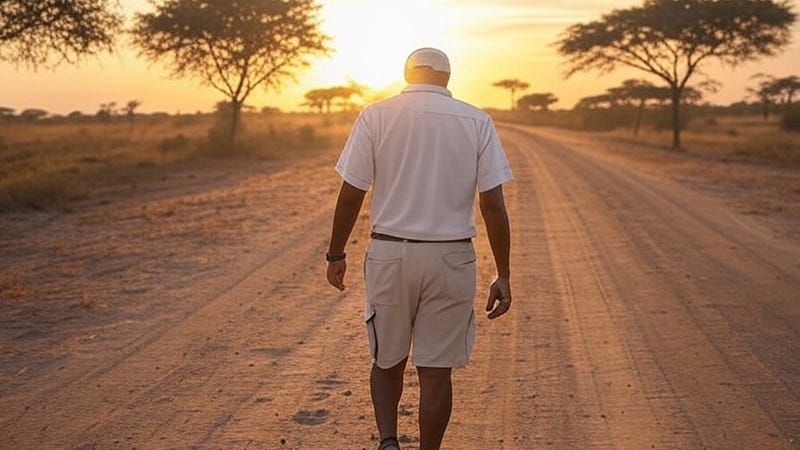
Between Paradise and Purpose
The identity crisis nobody in the safari industry is talking about.
Read on Substack →
What 117 Guides Just Told Me
The findings from the industry's first dedicated study into guide mental fitness.
Read on Substack →
The Mathematics of Performance: Guides
How the numbers behind guide performance tell a story most lodges haven't heard yet.
Read on Substack →